












By Ahmed Salami
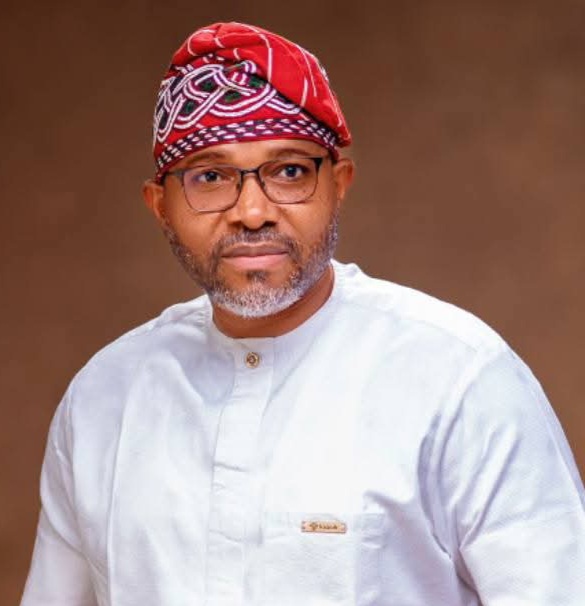
By any serious measure of leadership competence, courage, consistency, and capacity Razaq Obe has earned his place in the conversation about purposeful governance in Ondo State.
As he turns 50, this is not merely a celebration of age, but of a life shaped by preparation and defined by service.
In a country where public office is often occupied without adequate preparation, Engr. Razaq Obe represents a different tradition: that of the technocrat who paid his dues before stepping into governance.
Trained as a petroleum engineer and refined through advanced studies in oil and gas project management, he built his early career within the disciplined corporate culture of ExxonMobil. There, performance was not aspirational it was mandatory. Systems were respected, standards were enforced, and accountability was institutional.
Those formative years shaped his approach to leadership. They instilled in him the belief that results are products of structure, not slogans; of oversight, not noise.
When he transitioned into public service as Commissioner for Energy and Mineral Resources in Ondo State, he carried this corporate discipline into government. The energy and mineral sector is central to economic growth, investor confidence, and long-term sustainability.
Managing it requires more than political instinct; it requires technical understanding and strategic clarity. His tenure reflected a deliberate effort to align policy with measurable development goals, emphasizing resource optimization and structured engagement.
Today, under the leadership of Governor Lucky Aiyedatiwa, Engr. Obe serves as Director-General of the Performance and Project Implementation Monitoring Unit (PPIMU). In many ways, this is one of the most consequential roles in government.
Political manifestos are easily written; implementation is the true test of seriousness. The PPIMU sits at the core of that test tracking projects, evaluating timelines, ensuring compliance, and demanding measurable progress across ministries and agencies.
This is not a ceremonial office. It is an accountability engine. It requires firmness without hostility, coordination without compromise, and the courage to insist that public resources translate into visible outcomes. His appointment signals trust in his integrity and analytical strength.
At 50, Engr. Razaq Obe stands at a pivotal point where experience converges with opportunity. He represents a generation of leaders who understand that governance is not theatre; it is systems management. It is not about occupying space; it is about delivering results.
His journey from multinational corporate operations to executive oversight in state government demonstrates a rare blend of technical proficiency and administrative maturity. In an era where citizens are increasingly demanding competence over charisma, such a profile becomes not just relevant, but necessary.
There is also a broader lesson in his trajectory. Leadership is not accidental. It is built over years of professional rigor, disciplined service, and principled engagement. Fifty, in this context, is not a plateau; it is a consolidation point. It is the stage where preparation meets expanded responsibility.
For Ondo State and beyond, figures like Engr. Razaq Obe represent the possibility of governance rooted in performance metrics rather than political theatrics.
His current role in monitoring and implementation may well be a prelude to even broader responsibilities in the evolving political landscape. Where competence is valued, his profile fits naturally into conversations about deeper executive engagement and higher institutional leadership.
As he marks this milestone, the significance goes beyond personal celebration. It is an affirmation that technocratic excellence has a place in Nigerian politics. It is a reminder that integrity and discipline still matter. And it is evidence that sustained preparation eventually finds its moment.
At 50, Engr. Razaq Obe is not slowing down. He is consolidating influence, refining vision, and positioning for greater impact. The golden age, in this case, is not symbolic it is strategic.
Salami, a journalist and public affairs analyst, writes from Abuja