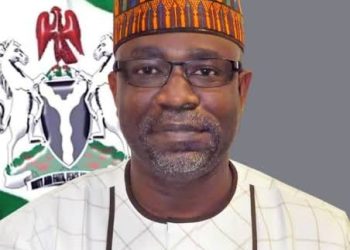

















By: Ahmed Salami
In Lagos, where urbanization continues at an unprecedented pace, the housing sector remains both a vital component of development and one of the state’s most persistent challenges.
The pressure on land, the expansion of informal settlements, and the growing demand for safe, affordable homes have tested successive administrations.
Yet, under the stewardship of the Commissioner for Housing, Hon. Moruf Akinderu-Fatai, the sector has witnessed a degree of stability, progress, and institutional discipline that deserves objective acknowledgment.
Commissioner Akinderu-Fatai has distinguished himself not through lofty declarations but through measurable outcomes that speak directly to the needs of residents.
His approach to housing has been defined by a deliberate blend of policy innovation, project continuity, transparency, and regulatory firmness traits that remain essential in a sector notorious for stalled projects and inconsistent delivery.
Driving Projects to Completion
One of the most commendable aspects of the Commissioner’s tenure is his insistence on completing inherited projects, a practice that continues to set Lagos apart from many other Nigerian states.
Several housing schemes previously slowed down by funding gaps, administrative bottlenecks, or technical lapses have been completed and commissioned under his leadership.
Estates in Igbogbo, Ibeshe, Sangotedo, Lekki Phase II, Igando, Badagry, and Epe now serve as proof that government can indeed deliver when continuity is prioritized over politics.
This emphasis on finishing what has been started reflects a governance philosophy that places public interest ahead of political point-scoring an approach that editorial boards have consistently advocated across the federation.
Reinforcing Transparency and Public Confidence
Public housing often suffers from credibility issues, with citizens doubting the fairness of allocation processes.
Akinderu-Fatai has made notable progress in reversing this narrative. The enhanced transparency frameworks within the LagosHOMS initiative backed by clearer guidelines, better documentation, and reduced bureaucratic loopholes have helped restore public trust.
While the work is far from complete, the Commissioner’s commitment to fairness is a welcome development in a sector long plagued by speculation and informal racketeering.
Partnerships That Expand Housing Access
Given Lagos’ unique complexities, it is evident that government alone cannot bridge the housing deficit. The Commissioner’s deepened engagement with the private sector through Public Private Partnerships (PPPs) is therefore both strategic and necessary. These collaborations have mobilized private capital, introduced new technologies, and expanded the delivery pipeline for mixed-income housing.
Crucially, this partnership model reduces the financial burden on the state while accelerating the pace of development an approach that aligns with global best practices.
Strengthening Regulation and Ensuring Safety
Lagos has endured too many tragic incidents of building collapse. In such an environment, strict enforcement of building standards becomes non-negotiable. Akinderu-Fatai’s insistence on compliance, his frequent site inspections, and the ministry’s renewed focus on material integrity mark a decisive shift towards a safer construction culture.
While no regulatory system is perfect, the Commissioner’s proactive stance is a significant improvement on past laxities that contributed to preventable disasters.
A Measured, People-Focused Administrator
Unlike many public officials who remain distant from the realities of their sectors, Akinderu-Fatai has maintained a visible presence engaging with residents, contractor groups, artisans, and cooperative associations. This accessibility has enhanced communication flows, improved project monitoring, and supported the broader stability of the housing ecosystem.
His leadership style calm, deliberate, modest, and technically grounded stands in refreshing contrast to the bombast that often characterizes public office.
A Standard Worth Sustaining
The progress recorded in the Lagos housing sector does not imply that all challenges have been resolved. Far from it. The population continues to grow, the informal rental market remains dominant, and affordability gaps persist. But progress must be acknowledged where it is evident, and in this regard, Hon. Moruf Akinderu-Fatai has made notable strides.
His work has provided a model for how state-backed housing can be delivered with discipline, continuity, and accountability. More importantly, it demonstrates that effective leadership anchored in competence rather than noise is still attainable in public service.
As Lagos continues its urban transformation journey, sustaining this level of performance will be crucial. Housing is the backbone of any functional city, and the Commissioner’s steady stewardship offers a benchmark that should guide future policy direction.
Ahmed Salami, a journalist and public affairs analyst, writes from Abuja