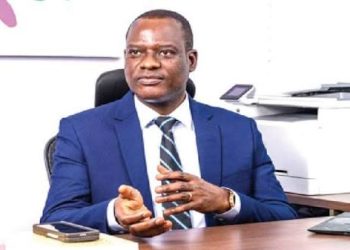

















By Ismail Omipidan
At first, my intention was to address this memo directly to the Senate, especially as it is likely that the lawmakers will discuss the matter again today. However, on a second thought, I decided to speak directly to Nigerians. In doing so, I borrow the admonition of His Excellency, Babatunde Raji Fashola, SAN, that this intervention is addressed strictly to right-thinking and well-meaning Nigerians. They are my focus.
As someone who participated actively in the Osun 2022 Governorship election, including all stages of the litigation that followed the exercise, I consider it dangerous to follow popular sentiment on the call for real-time transmission of election results in a country where, at the slightest provocation, a labour leader can shut down the national grid.
Have we forgotten that in the Osun Governorship election litigation, part of the reasons canvassed by both INEC and the PDP lawyers for the production of ‘synchronised BVAS report’ was network delay? Whereas, this synchronised BVAS report was procured after the APC had filed its petition, which is just like having access to marking scheme before sitting for an examination.
It is my personal experience in that exercise that compelled me to address right-thinking and well-meaning Nigerians today. Rather than agitating for real-time transmission of election results, a practice that is not even adopted in many democracies more advanced than ours, we should instead focus our energy on strengthening the use of BVAS for accreditation.
I recall stating clearly, after the Supreme Court judgment on the Osun Governorship election in 2023, that proving over-voting would become difficult going forward. Events that followed across other election petitions confirmed this concern. The court held that, notwithstanding the introduction of BVAS, a Voter Register was still required to prove over-voting. This reasoning is quite troubling, considering that BVAS was introduced specifically to cure the longstanding abuses associated with the Voter Register.
For the avoidance of doubt, BVAS captures only those who physically present themselves to vote on election day, while the Voter Register contains everyone, those who presented themselves for the voting exercise, those who did not, and even those who are deceased. In such circumstances, one must ask: of what practical use is the Voter Register in proving over-voting where BVAS data exists? Until we confront these contradictions and strengthen the integrity of BVAS, the push for real-time transmission risks becoming a distraction rather than a solution.
Meanwhile, the Electoral Act is clear. BVAS is the only means of accreditation. And to make a return as to the announcement of the results of election, the presiding officer must take into account what the BVAS transmitted as per accreditation, which is in the back end. In this instance, the incumbent governor, Senator Ademola Adeleke was declared winner of that election by INEC on July 17, 2022 based on the figures the BVAS transmitted. It was these figures the APC and its candidate, Adegboyega Oyetola applied for and got from INEC on July 27, 2022.
After filing their petitions, the PDP rushed to INEC and obtained what was later referred to as a “synchronised” BVAS report, dated August 22. I did not hear any civil society organisation make any noise about that obvious anomaly.
In issuing this second one, INEC had claimed that as at the time it issued the first CTC BVAS report, which was the basis upon which APC approached the Tribunal, the data had not been synchronised. Recall that election was held July 16 and results declared July 17.
Assuming without conceding that there should be a synchronised BVAS report, the next question to ask is : on what basis then was Adeleke declared winner on July 17, 2022?
By their stretch of argument, it means Adeleke was declared winner before “synchronisation.” Since Adeleke was never declared winner by opening the BVAS machine. At any rate, even in that one too, the expert hired by Adeleke, Samuel Oduntan, to analyse the BVAS machine also admitted before the court that there was over-voting. The only difference is that he said it was discovered in only six polling units.
But during the cross-examination, APC and Oyetola counsels were able to prove to him that apart from the six he claimed over voting occurred, there were others.
What is more, INEC, the beneficiary (Adeleke) and the PDP, which sponsored Adeleke could not even agree on the BVAS reports they presented before the Tribunal. This was what led Adeleke’s lawyer to disown even the synchronised BVAS report INEC presented to the Tribunal.
Again, INEC’s witness, who testified before the Tribunal did not disown the BVAS report given to Oyetola and APC and she admitted under cross-examination that there was indeed over-voting in that election. Take note that apart from the BVAS report obtained by the APC and Oyetola, all other BVAS reports were generated after the petition had been filed and served. Therefore, it was easy to conclude that they were products of afterthought.
And the Tribunal, led by Justice Tertsea Kume, reiterated the above position when it said: “Moreover, exhibit BVR (given to Oyetola and APC) has not been withdrawn by the first respondent (INEC), who made and issued it. The petitioners relied on exhibit BVR in maintaining this petition.
“Similarly, the exhibit tendered by the respondents after exhibit BVR submitted by learned counsel to the petitioners were thought of after the declaration of result on the 17th day of July, 2022.
“The said conduct of the respondents, especially, the first (INEC) respondent amounts to tampering with official records. The conduct of the first respondent in the said election under consideration has produced multiple accusation report, contrary to votes declaration, to conduct of free, fair and credible elections on the basis of one man or woman with one vote.”
While I agree with INEC and most Nigerians that nothing is wrong with BVAS, I, however, make bold to say that a lot is wrong with the operators, especially those who came up with the idea of synchronisation. So, that is my fear over the so called real time transmission of results. Have we thought of network delay, or even outright blockage by some unscrupulous elements?
For me, all stakeholders interested in deepening our electoral system and democracy must devise means to tackle synchronisation of BVAS report and stop this noise about real time transmission of results that is likely to create more problems than it is intended to cure.
Finally, to Mr. President, you have taken very hard decisions in the past. Therefore, you must not shy away from taking this one as well. I do not support rushing Electoral Act Amendment close to elections. The rush creates more issues than the exercise sets out to cure. Your Excellency, sir, in case the lawmakers out fear of cyberbullying, protests and attacks, decide to follow the crowd, and not necessarily because they believe in it, I enjoin you to withhold your assent to the bill. We must not follow the crowd to throw the country into avoidable chaos in the name of real-time transmission of results.
Omipidan is a Journalist, an author and a Public Affairs Analyst.