
















By: Bolaji O. Akinyemi
Female Genital Mutilation (FGM) remains one of the most persistent and controversial cultural practices in parts of South-West Nigeria. Despite decades of advocacy, public awareness campaigns, and legal prohibition, the practice continues quietly, deeply rooted in notions of tradition, morality, and family honour.
While health experts and human-rights activists have repeatedly highlighted the dangers of FGM, it persists in rural, semi-urban, and even some urban households, especially among communities with strong adherence to cultural or royal traditions. Understanding why this practice survives requires more than looking at medical consequences or legal frameworks; it requires examining the social, spiritual, and psychological underpinnings that sustain it.
Tradition, Honour, and Lineage
In many South-West communities, FGM has historically been framed as a rite of passage a ritual that signifies the transition from childhood to womanhood. It has been linked to ideas of purity, chastity, and moral discipline, with families believing that it safeguards daughters from sexual “immorality” and ensures marital suitability.
In particular, royal and aristocratic households attach an added layer of significance to the practice. In these contexts, daughters are often seen not just as children but as custodians of family reputation and ancestral honour. Oral accounts and community testimonies indicate that girls between the ages of six and twenty are sometimes subjected to FGM, depending on family expectations, social standing, or perceived readiness for womanhood.
Rejecting the practice in such households is rarely considered an option. Non-compliance is often interpreted as bringing shame, spiritual disruption, or ancestral displeasure upon the family. Consequently, even educated and globally connected members of these communities sometimes feel compelled to conform to cultural expectations. In this light, FGM becomes less about personal choice and more about a performative obligation a ritual that reinforces lineage, social hierarchy, and moral authority.
Elite Identity and Cultural Continuity
In some South-West royal homes, FGM has also historically served as a marker of elite cultural identity. Daughters of royal lineage are sometimes subjected to the practice as a symbolic affirmation of moral discipline and sexual restraint. Families believe this ensures that young women uphold the reputation and continuity of the lineage.
These households often normalize FGM, not merely as a traditional act, but as a cultural imperative a practice that distinguishes elite families from ordinary citizens and signals adherence to ancestral norms. It is a vivid reminder of the power dynamics surrounding the female body, autonomy, and sexuality. In these cases, rejecting FGM would not only challenge family tradition but also social prestige, making intervention by external actors particularly difficult.
The Human Cost of Tradition
Modern medical research unequivocally demonstrates that FGM carries serious health and psychological consequences. Survivors face permanent physical injuries, sexual dysfunction, severe pain, emotional trauma, and in extreme cases, death. Complications during childbirth are higher for women who have undergone the procedure, and many survivors report long-lasting psychological effects, including anxiety, depression, and post-traumatic stress.
Despite these documented risks, many communities continue the practice, often believing that it protects daughters from social or spiritual dangers. The perceived benefits honour, chastity, and marital prospects are prioritized over physical well-being, creating a stark contrast between public health priorities and entrenched cultural norms.
Law on Paper vs. Culture on the Ground
Nigeria’s legal framework is clear. The Violence Against Persons Prohibition (VAPP) Act and other state laws explicitly criminalize FGM. Yet enforcement remains largely symbolic, particularly in rural and semi-urban areas where cultural norms are treated as the ultimate authority.
Law enforcement officers, many of whom share the same cultural backgrounds as those involved, are often reluctant to intervene. The reasons are multiple: fear of community backlash, accusations of cultural insensitivity, and even concerns about spiritual repercussions. As a result, the law is seen as distant or irrelevant, while tradition dictates practice.
This tension illustrates the profound challenge Nigeria faces in enforcing gender-protective legislation in areas where social and spiritual allegiances outweigh legal mandates.
Why FGM Continues
FGM persists not because communities are unaware of its harms, but because it is deeply tied to identity, marriageability, and social legitimacy. In some families, it is also about power the ability to control female bodies and ensure that daughters conform to social expectations.
In royal or aristocratic households, the practice reinforces a hierarchy that privileges ancestral authority over individual autonomy. It sends a message that girls are not merely family members but instruments of cultural continuity. The female body becomes a territory of culture, where obedience and conformity are more important than personal health or rights.
Even outside royal households, the practice survives because it is normalized through community pressure, peer reinforcement, and the socialization of young girls. Families fear that abandoning FGM could invite ostracism, reduce marriage prospects, or signal moral laxity.
The Role of Advocacy and Education
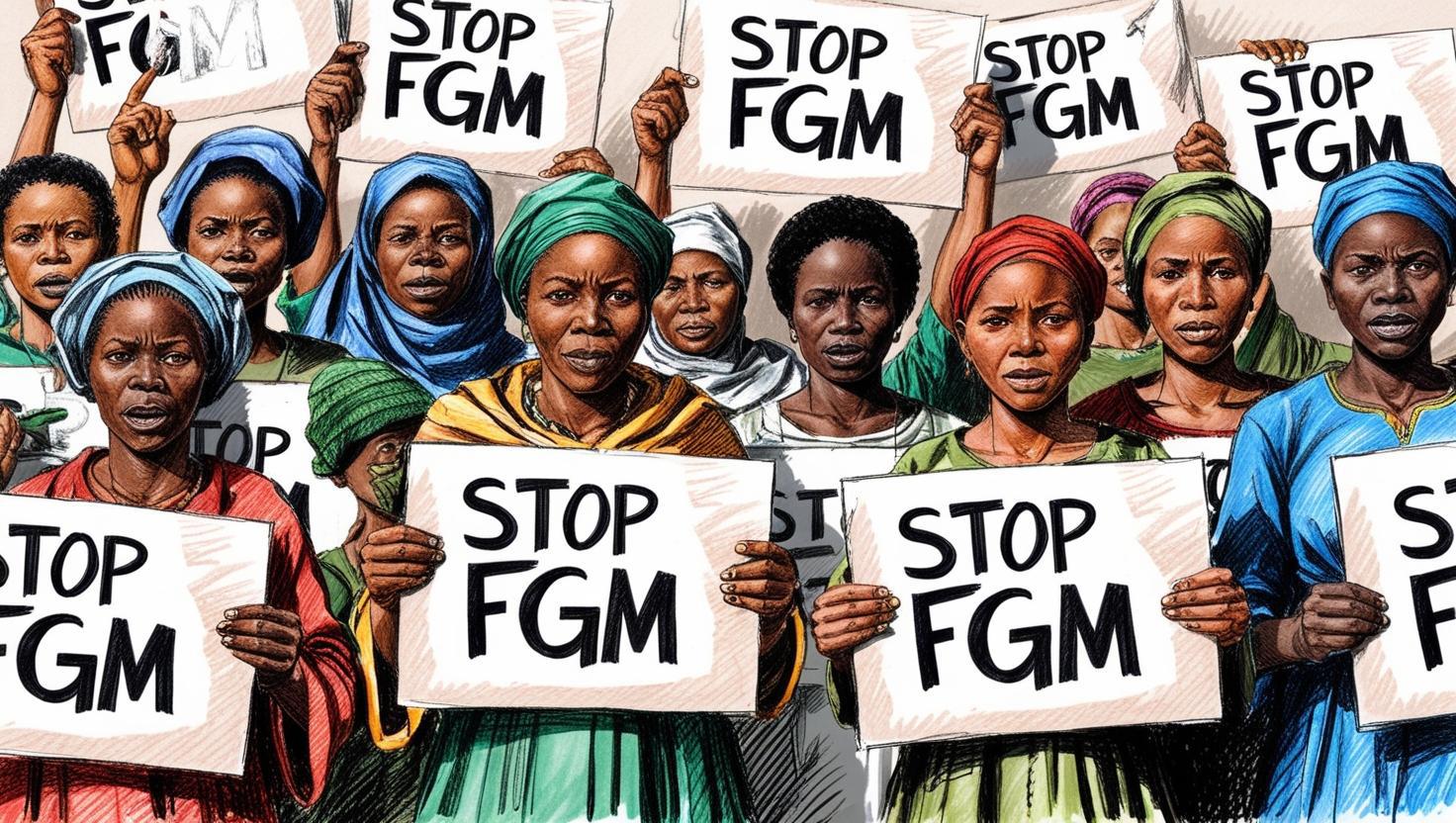
Ending FGM requires more than passing laws; it demands community engagement, education, and dialogue. Programs that involve traditional rulers, women leaders, and local health workers have shown promise, particularly when they respect cultural contexts while emphasizing the human costs of the practice.
Public awareness campaigns must address not only the physical and psychological dangers of FGM but also its social and spiritual rationales. Families must be offered culturally sensitive alternatives that preserve ritual, identity, and honour without endangering girls’ well-being.
Enforcement alone will not suffice. The law must be complemented by sustained, grassroots efforts that challenge cultural assumptions while empowering communities to adopt safer rites of passage.
The Future of FGM in Nigeria
The survival of FGM in South-West Nigeria highlights a broader challenge: the struggle between tradition and modernity, culture and human rights. As Nigeria continues to advance its gender agenda and deepen the rule of law, it must reconcile these competing forces.
The coming years will test whether Nigerian communities can evolve their cultural practices without compromising the health, dignity, and autonomy of women and girls. Failure to address FGM comprehensively could perpetuate a silent epidemic that undermines both public health and human rights. Conversely, successful reform could serve as a blueprint for harmonizing tradition with modern legal and ethical standards across the country.
Finaly, FGM is not merely a cultural or medical issue it is a social negotiation over power, identity, and gender. Its persistence in the South-West underscores the limitations of law when confronted with deeply entrenched traditions.
Nigeria’s path forward depends on bridging the gap between cultural allegiance and legal enforcement, educating communities about the human cost of harmful practices, and creating alternative ways to honor tradition without harming girls. The female body, long treated as the site of cultural performance, must finally be recognized as a territory of rights and dignity a frontier where culture and law can coexist without inflicting harm.